



Brain of the week
Oct 1, 2026
/ Empowering clinicians through hands-on learning and innovation
October 1, 2026
An interview between the British Dental Journal and Dr Jin Vaghela from Smile Dental Academy.
Solventum Dental Solutions are proud to support Smile Dental Academy with predictability, education and innovation.
How can dental professionals build confidence, embrace innovation and deliver more predictable outcomes for their patients?
Dr Jin J. Vaghela from Smile Academy explores how hands-on education, evidence-based materials and strong clinical support enable clinicians to learn, grow and excel in everyday dentistry.
JV: Smile Academy is a postgraduate dental education provider focused on helping clinicians develop both clinically and professionally.
Our philosophy is Learn, Grow, Support, Excel. We don’t believe postgraduate education should simply be about attending lectures or collecting qualifications. It should result in clinicians becoming more confident, delivering better dentistry and progressing their careers.
Over the past year, we’ve trained more than 3,000 dental professionals, supported by a faculty of over 130 clinicians and educators.
I think what makes Smile Academy particularly unique is that we’ve always believed a successful academy requires three different skill sets: great clinicians, great educators and great event organisers.
You can be an outstanding clinician, but that doesn’t necessarily make you a great educator. Equally, you can have fantastic educational content, but if you can’t organise and deliver an engaging experience around it, you lose something important. We have deliberately built Smile Dental Academy around all three.
Our programmes combine evidence-based teaching with extensive hands-on training, clinical mentorship, case discussions and ongoing support. We also place significant emphasis on areas that aren’t always taught at dental school, such as communication, treatment planning, leadership, the patient journey and understanding the business of dentistry.
We think about the entire delegate experience from the quality of the faculty and hands-on teaching to the venues, organisation, networking and energy in the room. We want people to enjoy learning and feel that they are part of a wider community.
The ultimate aim is to develop well-rounded clinicians who can deliver excellent dentistry confidently and predictably.

JV: Our relationship with Solventum is based around education, innovation and improving clinical outcomes.
For us, a partnership has to go beyond simply putting a company’s logo on a course. We want to work with organisations that contribute to clinical education in a meaningful manner.
There is a strong alignment between Smile Dental Academy and Solventum because we’re both focused on evidence-based dentistry, innovation, predictable clinical outcomes and making high-quality dentistry easier to deliver in everyday practice.
It also gives our delegates the opportunity to train using materials and technologies that they can take back into their own surgeries and use the following day.
JV: I think there are five things clinicians should consider: quality of teaching, hands-on experience, mentorship, clinical relevance and ongoing support.
Dentistry is a practical profession. Watching somebody perform a procedure is very different from actually developing the skill yourself. I would always look for programmes with significant hands-on components and educators who are actively practising the dentistry they teach.
The materials and equipment are equally important, and delegates should learn using solutions that translate into their own everyday clinical practice.
Finally, look at what happens after the course. Having access to mentors, case discussions and ongoing support can be just as valuable as the teaching itself.
JV: To us, confidence comes when delegates have the knowledge and experience they need to produce successful and repeatable outcomes. This is only possible with clinical exposure and repetition, and with the support of mentors during their course and long into the future.
We try to move delegates through that journey systematically: understand the theory, observe the technique, practise it hands-on, discuss cases and then implement it clinically with appropriate mentorship.
A major differentiator for Smile Academy is our emphasis on live-patient education. Our delegates observe live-patient demonstrations across treatments including composite bonding, injection moulding and porcelain veneers, taking techniques away from a model or phantom head and seeing how they work in a real clinical environment.
Within implant dentistry, we take this even further with live-patient training and dental implant placement, giving clinicians the opportunity to develop their skills in an appropriately supervised clinical environment.
That progression is important. There is a significant difference between understanding a technique theoretically, performing it on a model and ultimately being able to deliver it confidently and safely for a patient.
One of the most important parts of our Academy is creating an environment where people feel comfortable asking questions. Dentistry can sometimes be quite isolating, particularly once you leave university or foundation training.
Our aim is for delegates to feel that they have a network of experienced clinicians around them rather than having to make every clinical decision alone.
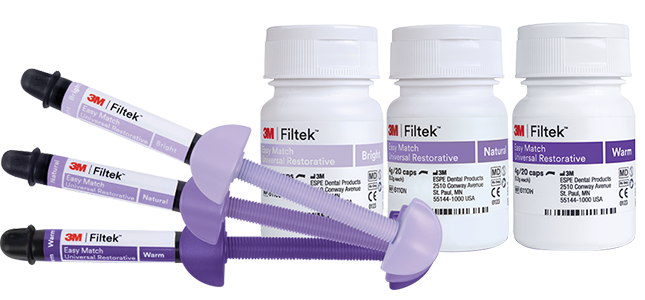
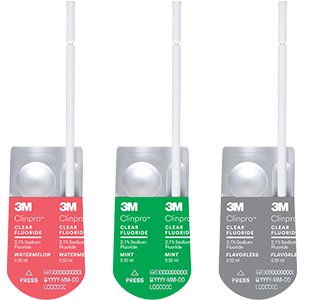
JV: We use a range of Solventum products across restorative, aesthetic and preventive dentistry.
Within restorative dentistry, that includes the Filtek™ dental restorative range, including 3M™ Filtek™ Easy Match Universal Restorative, alongside 3M™ Scotchbond™ Universal Plus Adhesive and 3M™ Sof-Lex™ finishing and polishing products.
All clinicians aim for predictability, so we need good handling, reliable adhesion, strength, polishability and aesthetic integration without unnecessarily complicating the clinical workflow.
3M™ Scotchbond™ Universal Plus Adhesive is particularly useful from an educational perspective because it provides a versatile universal adhesive suitable across direct and indirect indications and different etching approaches.
But our relationship with Solventum isn’t only about restorative dentistry. Prevention is becoming increasingly important, and 3M™ Clinpro™ Clear Fluoride Treatment is particularly relevant to our wider dental team.
This is especially topical following the changes to NHS dentistry from April 2026. Suitably trained and competent dental nurses can now provide prescribed standalone fluoride varnish treatment for children aged 16 and under. That creates a fantastic opportunity to develop our DCPs and dental nurses while moving dentistry towards a more preventive model.
For us, that means education doesn’t just focus on dentists. We can train and empower the whole dental team to work at the top of their scope and contribute to better patient outcomes.
JV: It’s increasingly important, particularly when you look at dentistry from both a clinical and business perspective.
One of the biggest operational problems in dental practices is unnecessary complexity. If you can simplify inventory while maintaining excellent clinical outcomes, there are significant advantages.
You potentially reduce stockholding, expired materials, waste and the number of products the team needs to manage.
There is also a clinical benefit. Simplification makes protocols easier for the entire dental team to understand and reproduce.
A solution such as 3M™ Filtek™ Easy Match Universal Restorative, with its simplified shade selection concept, fits very well with that philosophy – making the workflow simpler without compromising the aesthetic objective.
JV: The indications are incredibly broad because these products cross every aspect of modern dentistry.
Composite restorative materials form part of everyday workflows, including anterior and posterior direct restorations, replacing existing restorations, managing fractured or worn teeth, aesthetic improvements, composite bonding and additive restorative dentistry.
Within those workflows, products such as Filtek™ dental restoratives, 3M™ Scotchbond™ Universal Plus Adhesive and 3M™ Sof-Lex™ Finishing and Polishing System allow us to look at the entire restorative process – from adhesion and placement through to contouring, finishing and polishing.
3M™ Scotchbond™ Universal Plus Adhesive also has applications across direct and indirect restorative procedures, repairs, and veneer cementation protocols when used with the appropriate compatible cement.
JV: Modern patients quite rightly expect restorations not only to function well but also to integrate naturally with their smile.
One of the advantages of modern composite systems is our ability to reproduce the characteristics of natural teeth while remaining conservative with our application.
The optical properties, polishability and shade integration of the Filtek™ dental restorative range can help clinicians create restorations that blend naturally with the surrounding dentition.
But aesthetic success isn’t just about the composite itself. 3M™ Scotchbond™ Universal Plus Adhesive forms part of the adhesive workflow, while 3M™ Sof-Lex™ Finishing and Polishing System support the finishing and polishing stages that are so important when we’re trying to reproduce natural anatomy, surface texture and lustre.
We teach delegates that aesthetics isn’t simply about selecting a shade. It’s about understanding tooth morphology, proportions, line angles, surface texture, anatomy, finishing and polishing.
We also shouldn’t separate aesthetics from health. Preventive products such as 3M™ Clinpro™ Clear Fluoride Treatment sit at another point in that patient journey. Preserving healthy natural tooth structure and preventing disease should always come before restorative intervention wherever possible.
The combination of prevention, good material selection and excellent clinical technique is ultimately what produces beautiful, healthy and maintainable results.
JV: Very positive!
Delegates particularly appreciate materials that are intuitive and predictable because, when somebody is learning or refining a technique, unnecessary complexity can become a barrier to confidence.
When clinicians can achieve a strong result during a hands-on session, they’re much more likely to feel confident implementing that technique when they return to practice.
Something else that’s important to us is the clinical support behind the product. When a delegate leaves a course, we don’t want them simply to leave with a sample and be on their own. They need access to education, protocols and people who can answer clinical and technical questions when they begin implementing something in practice.
That’s one of the advantages of working with an established organisation such as Solventum, the materials are complemented by a broader infrastructure of education and support.
That’s ultimately what we want from our industry partners: good products, good evidence, good education and good clinical support that help translate learning into everyday dentistry.
JV: “Our partnership with Solventum brings together evidence-based dentistry, education, innovation and clinical support to give our delegates the confidence to deliver predictable, high-quality dentistry for their patients.”
This article was first published on September 25th on the British Dental Journal website. Source
Dr Jin Vaghela is the Founder and CEO of Smile Clinic Group and Smile Dental Academy. An award-winning clinician, educator and entrepreneur, he has built one of the UK’s leading dental groups while mentoring thousands of clinicians worldwide. Jin is passionate about helping dental professionals improve communication, leadership and patient experience to achieve exceptional clinical and business outcomes.