



Clinical Case
Sep 6, 2026
/ Clinical Cases / Restore form and function in extensive root caries with Solventum™ Filtek™ Easy Match Flowable Restorative
April 29, 2026
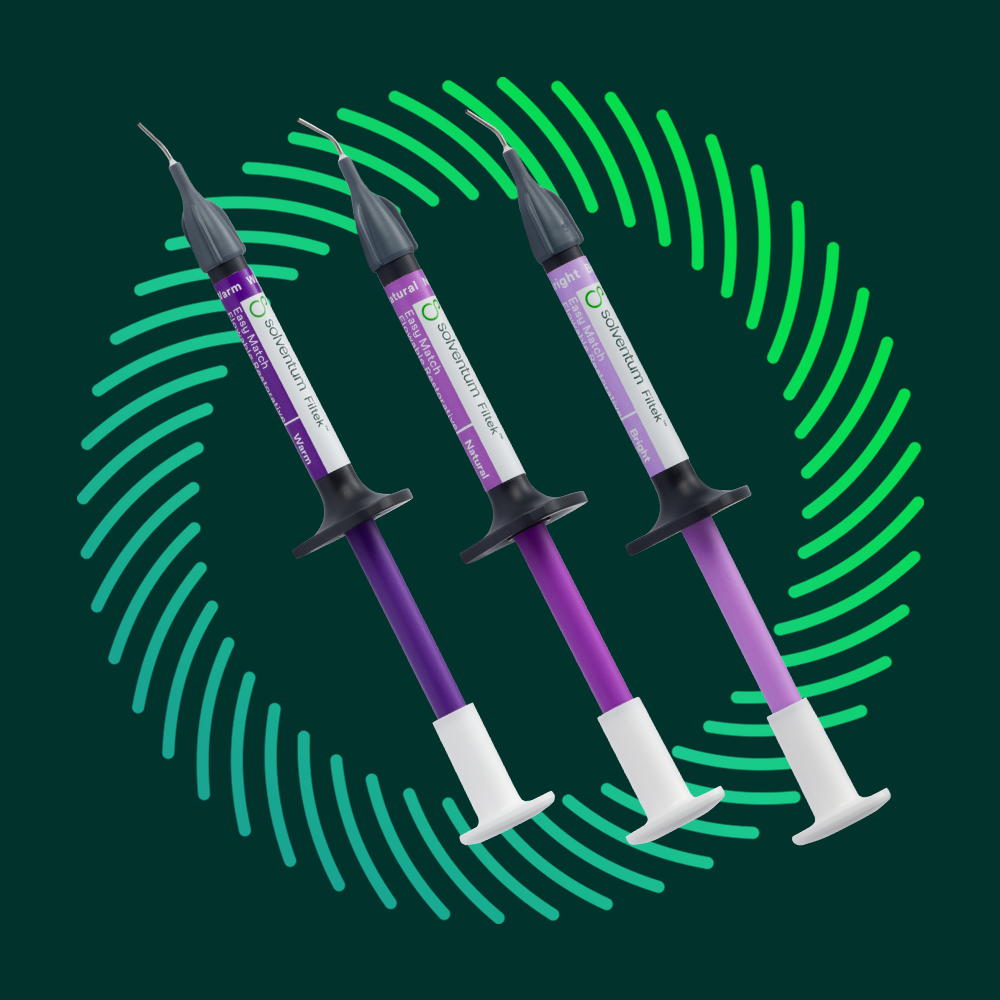
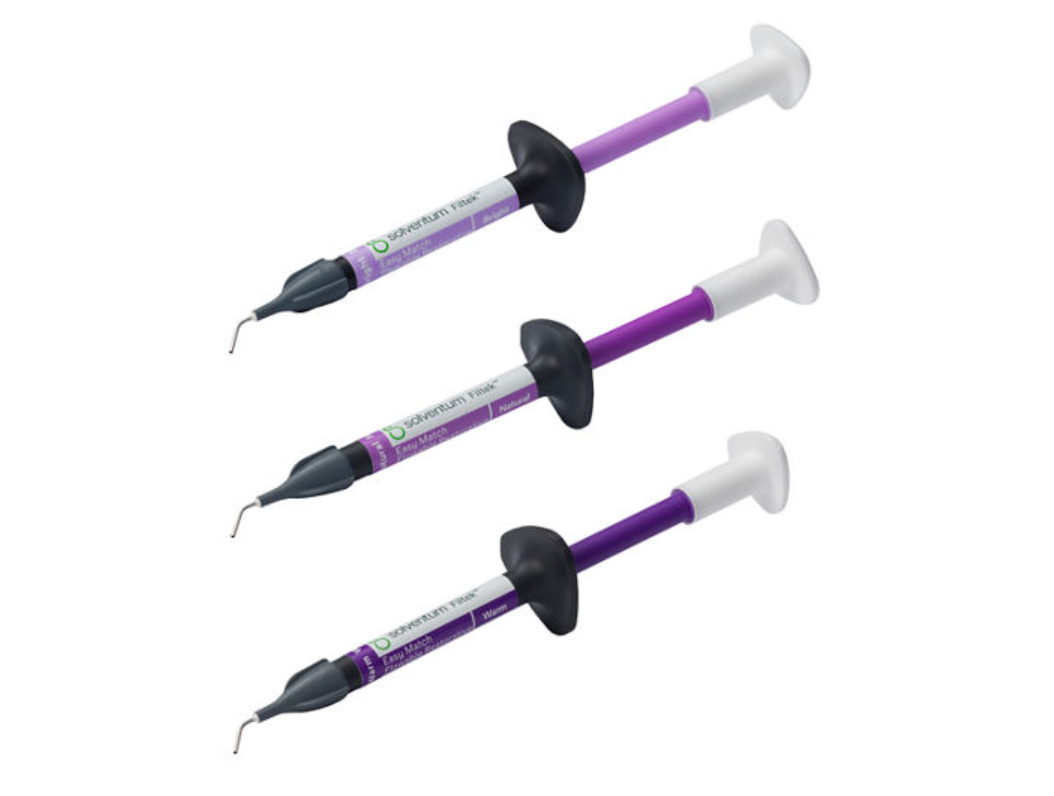
Using Solventum™ Filtek™ Easy Match Flowable Restorative.
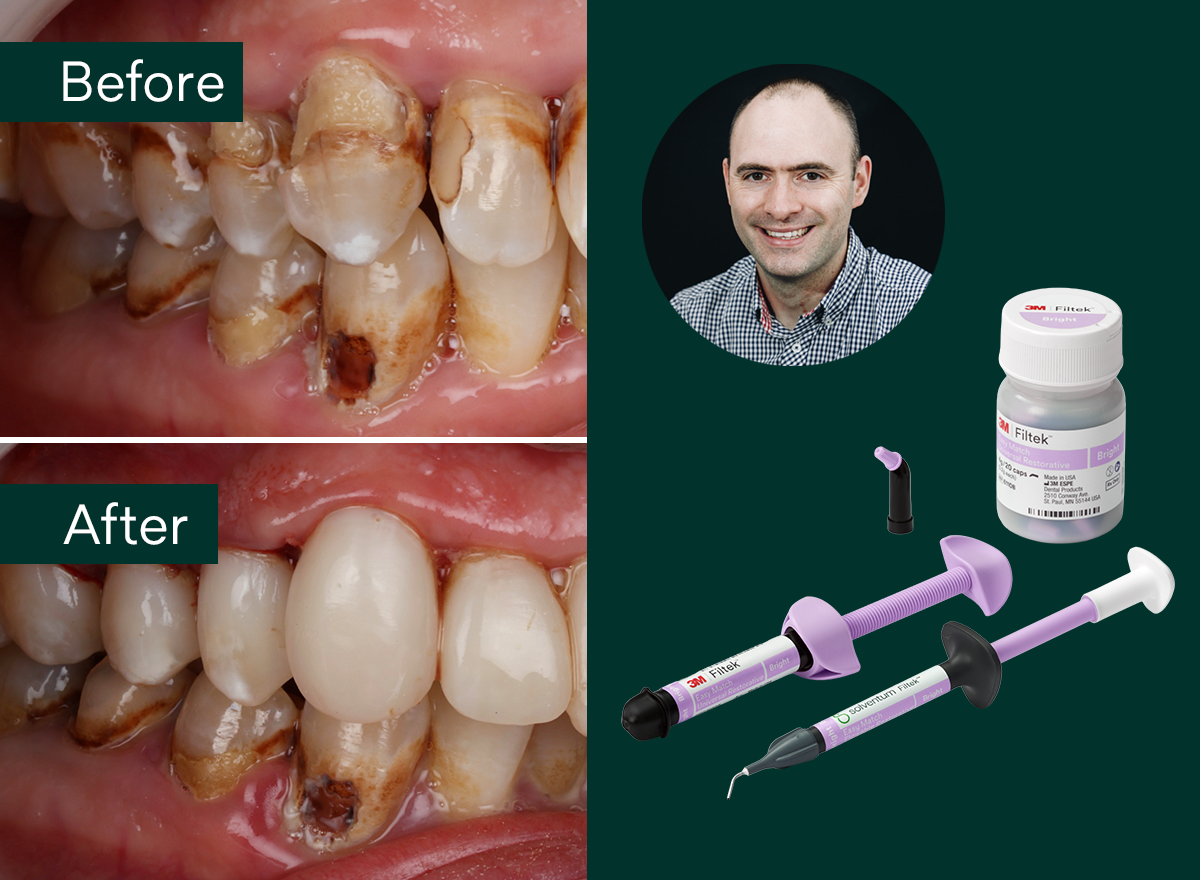
38-year-old male. Previous worked as a chef with high incidence of energy drink consumption. Extensive root caries noted. Patient referred for comprehensive treatment, to improve aesthetics and to try to salvage as many teeth as possible.
Restore form and function, provide an easy to clean surface and reduce risk factors. Root caries is especially difficult to isolate and treat as it tends to spread around the circumference of the teeth and is often more extensive than initially presumed.
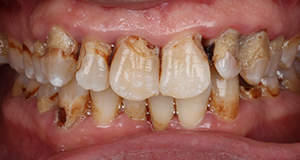
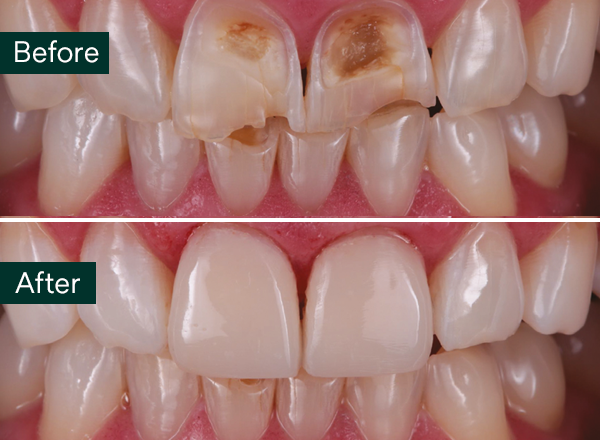
Pre-op situation Extensive root caries in almost every tooth. Clearly it is important to improve the patient’s hygiene (and diet) but to improve hygiene we really need to provide an easy to clean surface and build back some confidence and pride in the dentition.
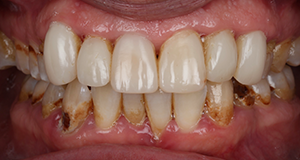
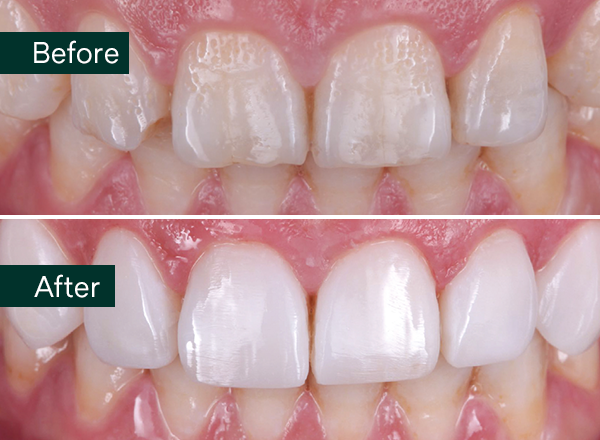
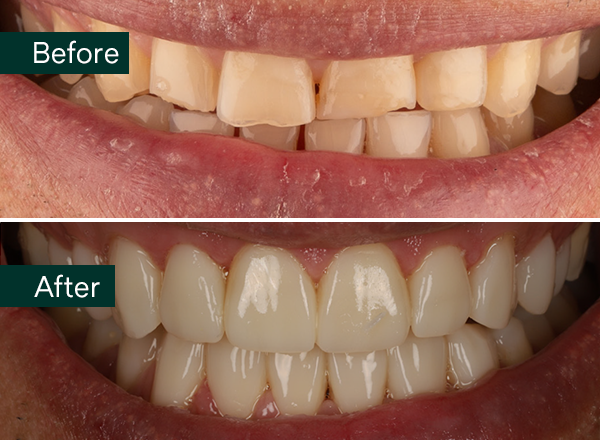
Anterior restorations were done in a previous appointment. Even with a single shade using 3M™ Filtek™ Easy Match Universal Restorative Bright Shade, a nice and natural result was obtained.
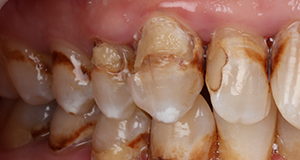
Detail of the right quadrants. Root caries like this is especially tricky to treat as it tends to spread around the circumference of the teeth and is often more extensive than initially presumed.
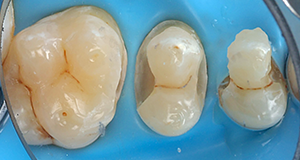
Preparations in upper right quadrant.
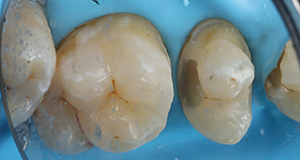
Preparations in upper right quadrant. More details of the cavity extension of second upper right premolar distal.
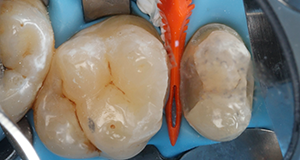
OC Clamp and wedge to isolate. Pre-wedge helps to gain visibility and better access for cavity restoration.
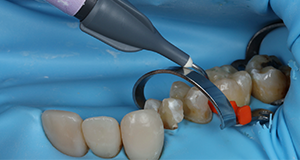
Solventum™ Filtek™ Easy Match Flowable Bright shade alone was selected to restore small cavities. Viscosity is perfect for excess control in small cavities in mesial upper right first molar and mesial upper right second premolar.
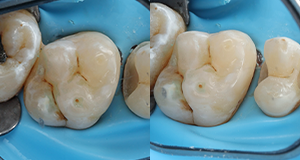
Finished restoration in upper right first molar (mesial). Notice the polish and perfect shape achieved with a flowable restorative.
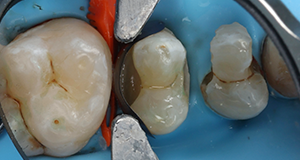
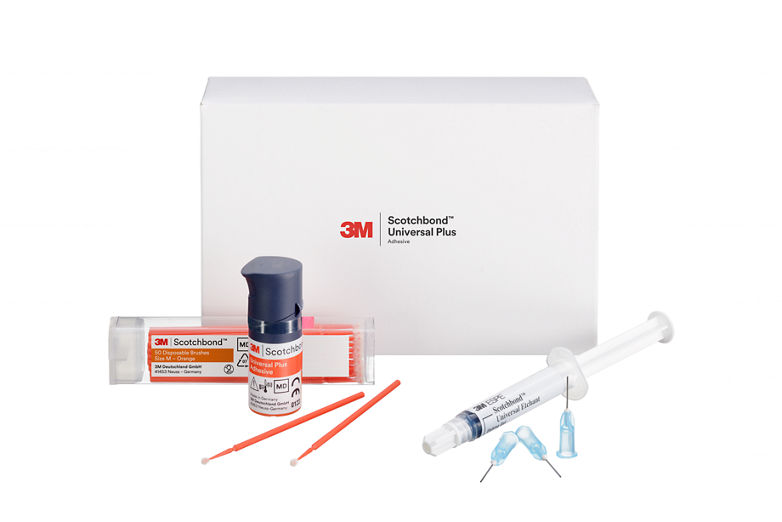
Sectional matrix and Incidental Ring to restore distal preparation in second premolar. After adhesive procedure using 3M™ Scotchbond™ Universal Plus Adhesive, Solventum™ Filtek™ Easy Match Flowable and 3M™ Filtek™ Easy Match Universal Restorative, both in Bright shade.
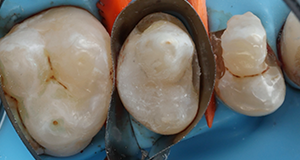
U Band for the buccal and mesial preparations in second premolar. Here the material will inevitably be overbuilt on the mesial aspect but will simply be trimmed back.
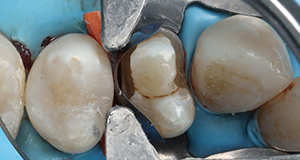
OC Clamp to isolate subgingival buccal. First premolar is a very difficult cavity. Look how the Incidental Ring can work around the clamp still to produce a decent contact profile.
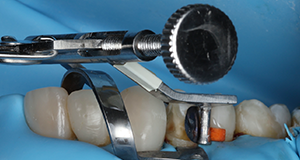
Detail of Incidental Ring.
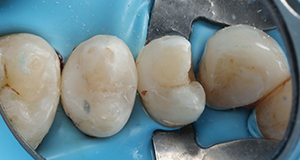
Distal contact in first premolar.
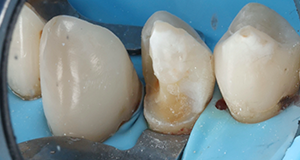
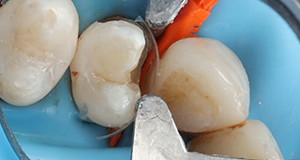
Concave margin mesial. Custom Mylar band and wedge were used. Incidental Ring showing versatility.
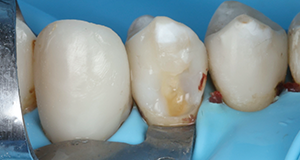
Quick clean up and buccal cavity to finish.
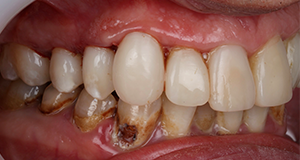
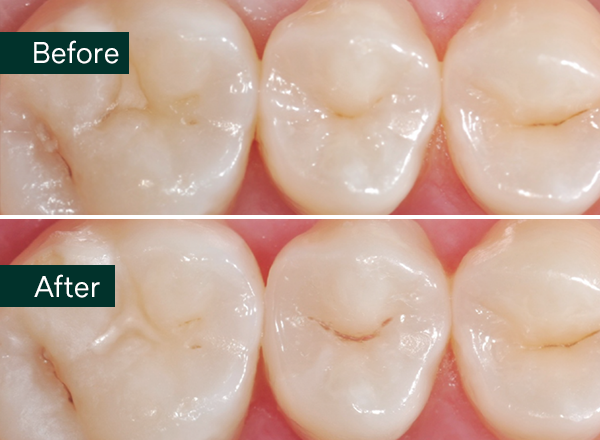
Immediate post-op result. Buccal view.
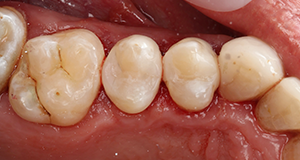
Immediate post-op result. Occlusal view.
This entire case has been completed so far with Filtek™ Easy Match shade ‘bright’ in paste and flowable preparations. The matrixing has been challenging in places but the versatility and simplicity of the composite used has certainly helped produce the result. I am most proud of the aesthetics and polish produced with a single shade restorative approach.
Would you like this clinical case as a PDF? You can

Become a part of our Brain Floss blog family and share your clinical case, your insights and your skills with this great community .
We are looking forward to hearing from you!!
A: Flowable universal restoratives combine excellent adaptability to irregular root surfaces with adequate strength and proven adhesion, allowing conservative removal and seamless restoration of form on challenging root lesions.
A: Remove soft,infected dentine conservatively, preserve as much sound structure as possible, clean the lesion, apply an appropriate adhesive following manufacturer instructions, and ensure a dry field for optimal bonding.
A: When used with correct adhesive protocols, incremental placement and appropriate bulk thickness, modern flowables designed for universal use demonstrate satisfactory longevity for non‑axial and low‑stress cervical/root sites; monitor and maintain as needed.
A: Use rubber dam when feasible; otherwise combine retraction cords, gingival barrier, high‑volume suction and careful soft‑tissue management to control moisture and contamination during bonding and placement.
A: Address caries risk factors (oral hygiene, diet, xerostomia), schedule regular recalls, apply topical fluorides if indicated, use minimally invasive restorative techniques with compatible adhesives/flowables, and educate patients on prevention.
Refer to Instructions for Use (IFU) for complete product information. Results may vary.