



Clinical Case
Mar 21, 2026
/ Clinical Cases / Endocrown cementation with 3M™ RelyX™ Universal Resin Cement and 3M™ Scotchbond™ Universal Plus Adhesive
March 30, 2026
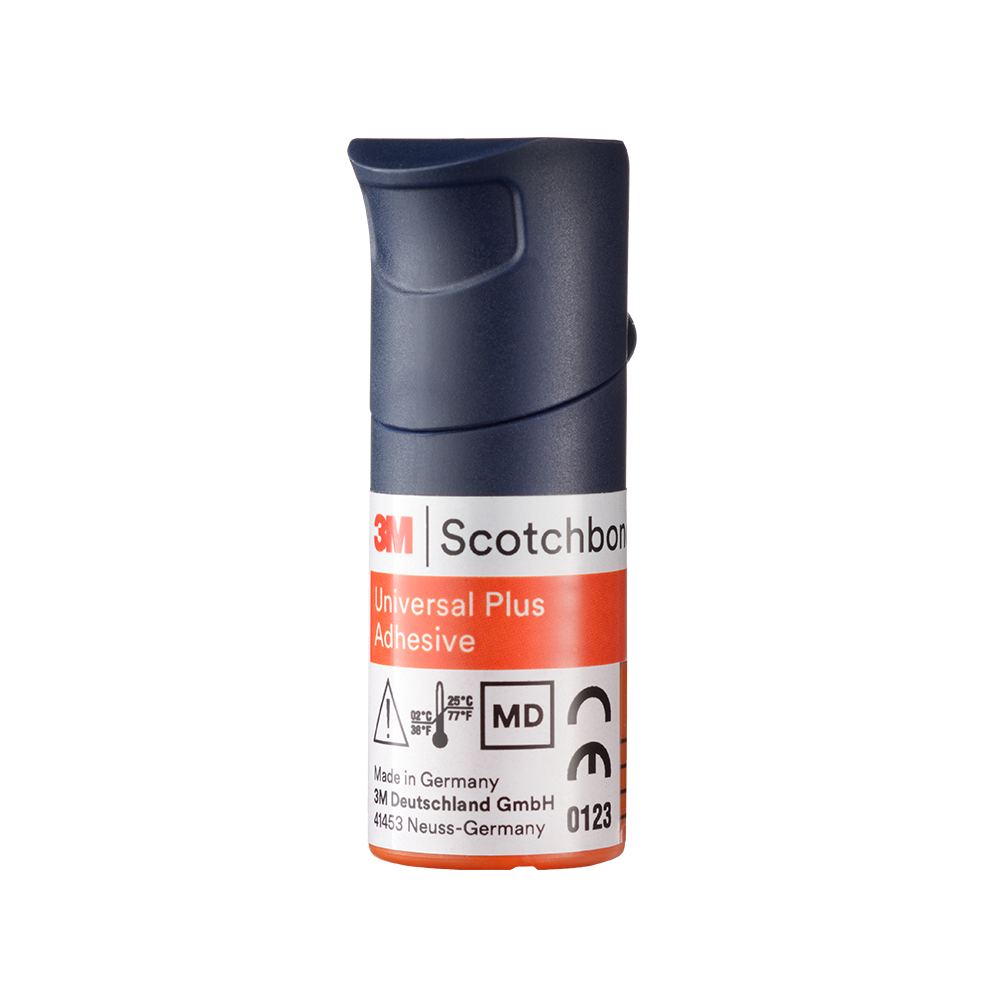
Using 3M™ RelyX™ Universal Resin Cement and 3M™ Scotchbond™ Universal Plus Adhesive.
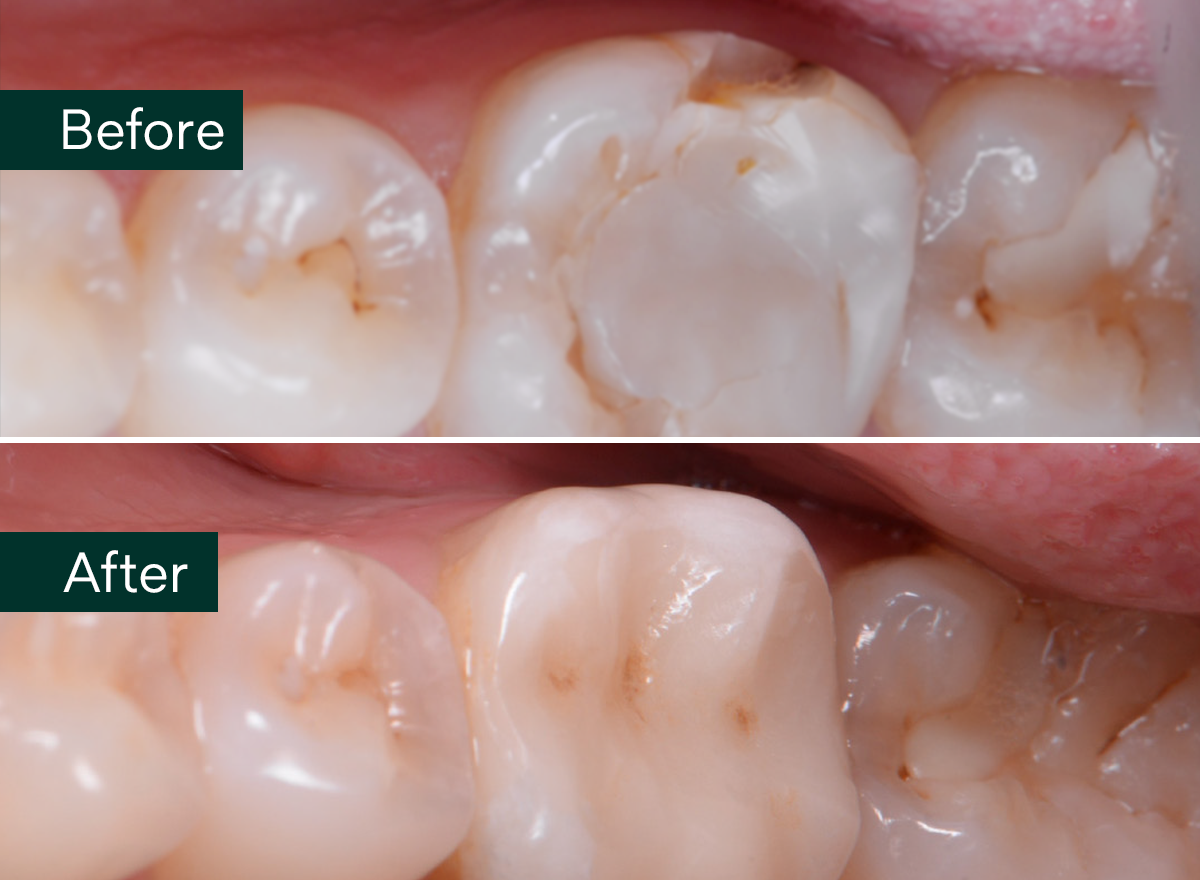
A 32-year-old female patient contacted the practice with a fractured filling on tooth 36 which included part of the cusps. The tooth had been endodontically treated several years before. It was decided to remove the composite and restore with a lithium disilicate endocrown.
Endocrowns take advantage of both adhesion and the retention from the pulp-chamber walls. In endodontically treated molars they offer a reliable alternative to the more invasive traditional full coverage crowns.
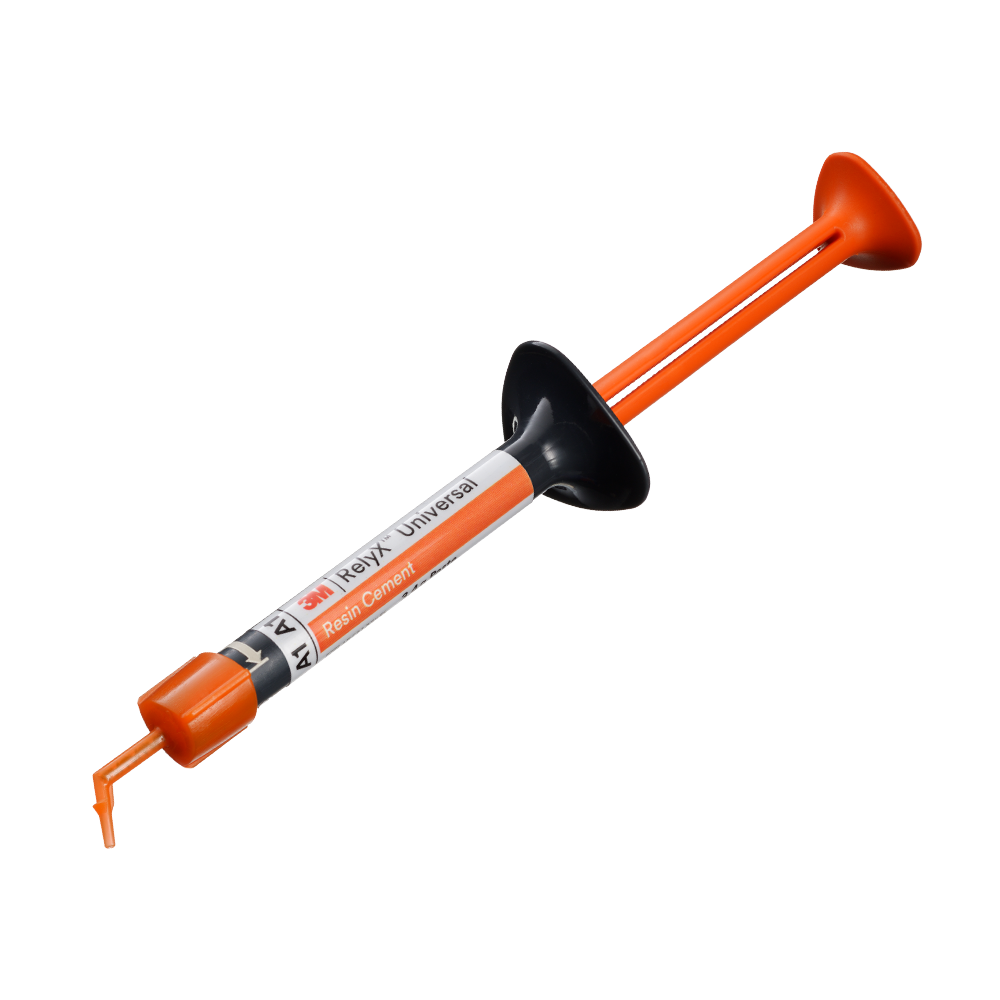
Key to success for endocrowns is a resin cement with a strong bond to the restoration material and to the tooth. In this case 3M™ RelyX™ Universal Resin Cement was used in combination with 3M™ Scotchbond™ Universal Plus Adhesive in the selective enamel etch technique.
The restoration functioned very well. At the two-year recall only some superficial wear was noted, cement margins were intact and free of discoloration.

Initial situation. Non-vital tooth #36 with a large, fractured composite filling involving part of the cusps.
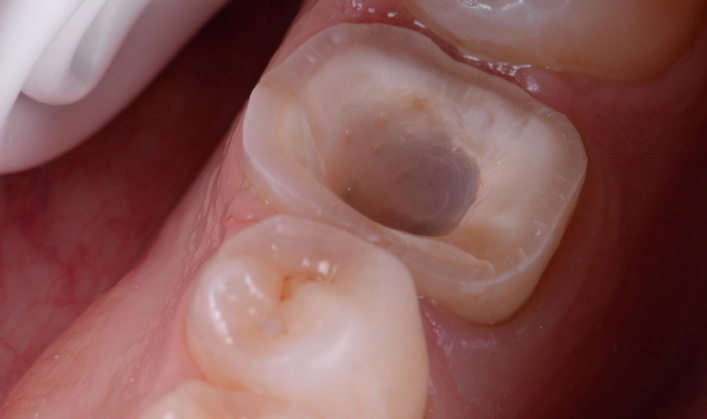
Endocrown preparation. Cusps and walls were reduced to allow full coverage of the tooth. Pulp chamber floor is protected by a layer of composite.
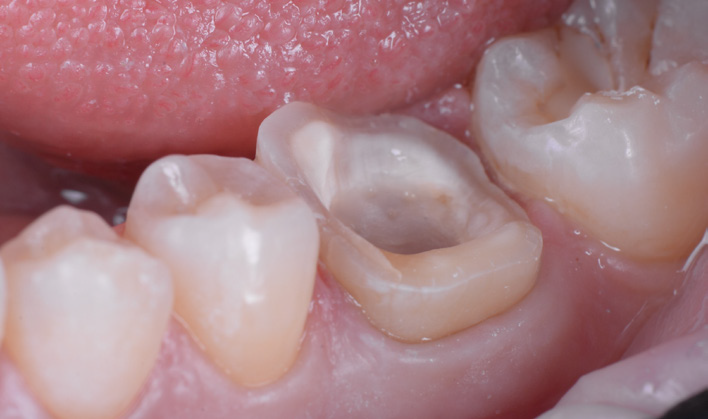
Buccal view of preparation. Pulp chamber provides ferrule for the restoration.
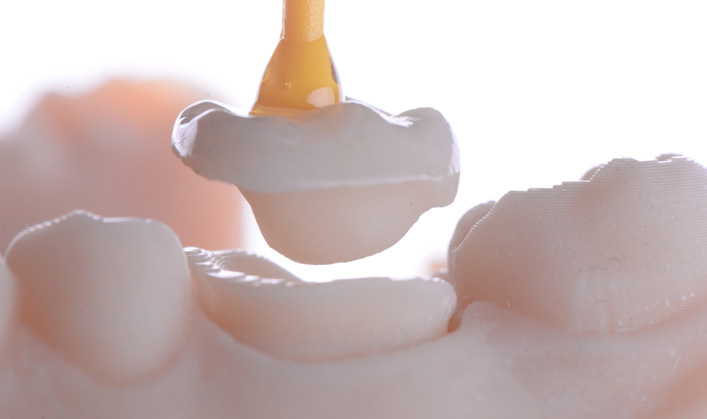
Monolithic lithium disilicate restoration and printed model.
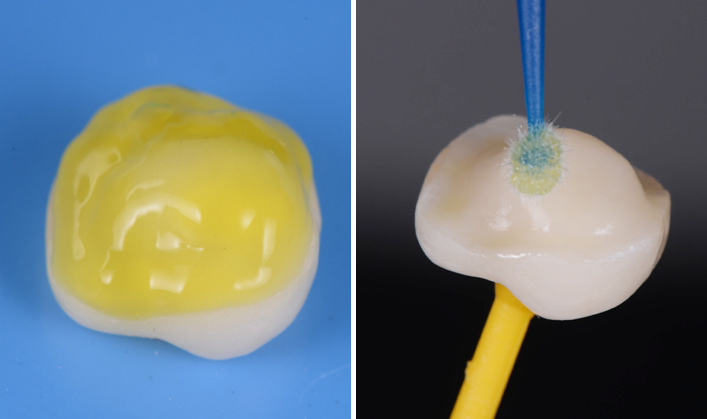
HF etching of bonding surface (left) followed by priming with 3M™ Scotchbond™ Universal Plus Adhesive (right).
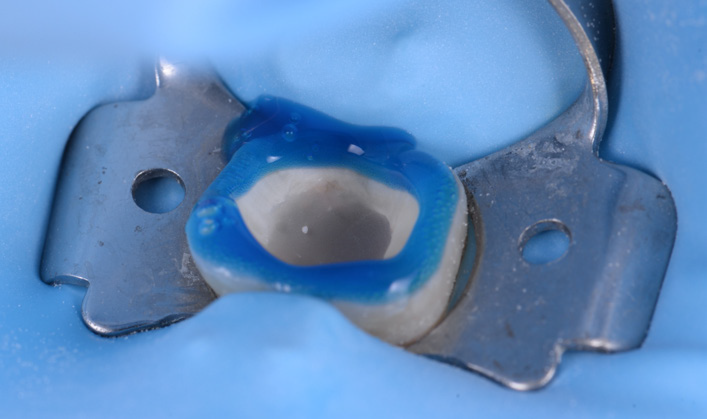
Selective enamel etching under total isolation.
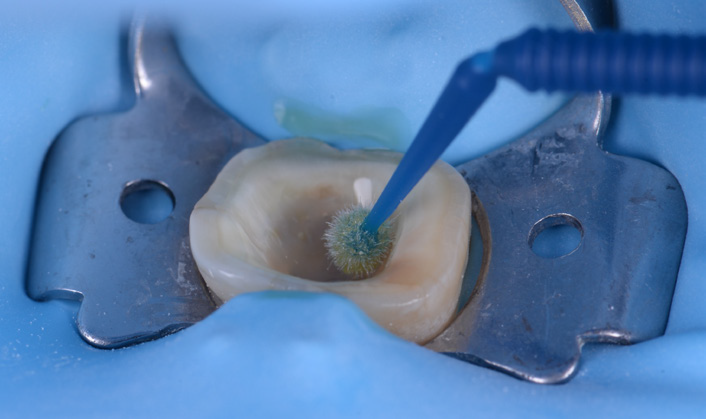
Application of 3M™ Scotchbond™ Universal Plus Adhesive.
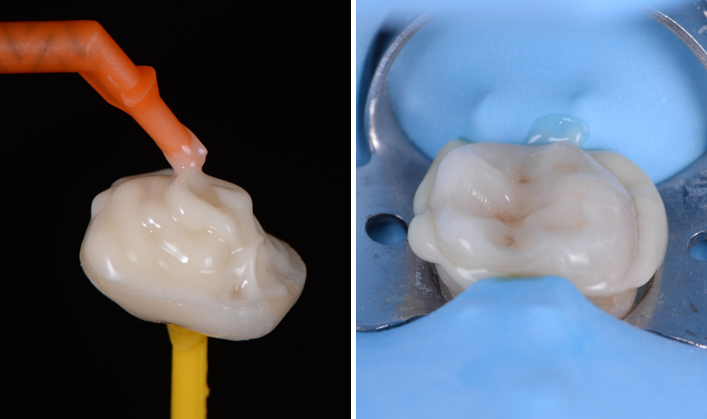
Application of 3M™ RelyX™ Universal Resin Cement (left) and seated restoration (right).
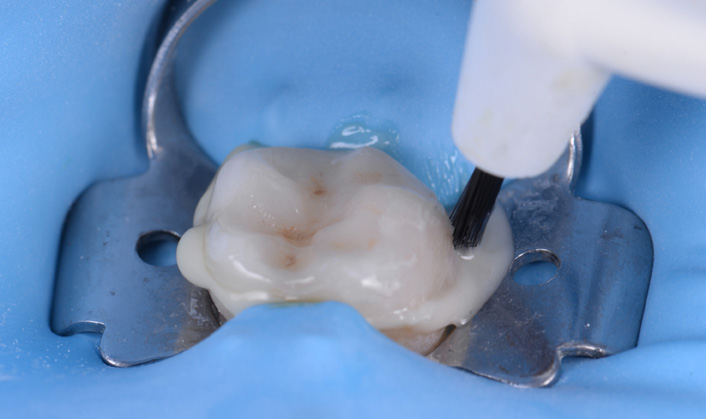
Cement excess clean-up.
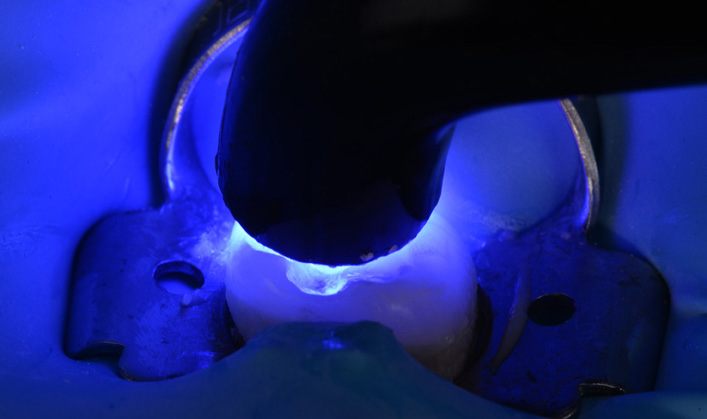
Final light cure.
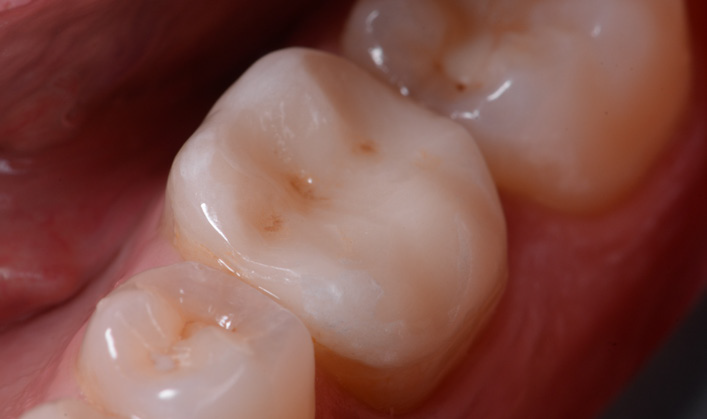
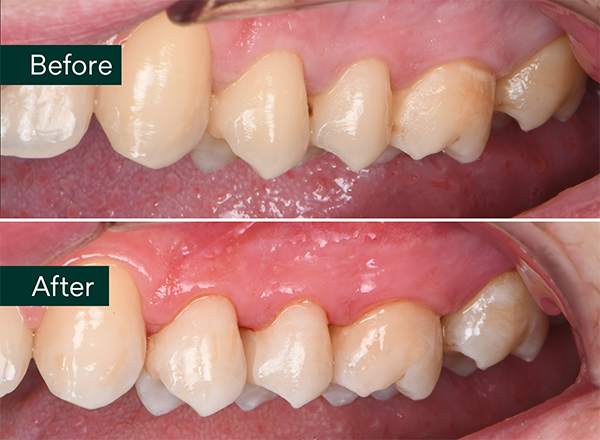
Final situation immediately after cementation.
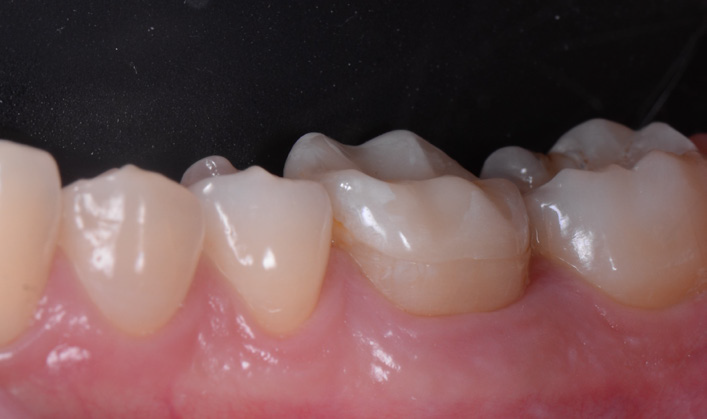
Restoration at two-year recall.

Become a part of our Brain Floss blog family and share your clinical case, your insights and your skills with this great community .
We are looking forward to hearing from you!!
Refer to Instructions for Use (IFU) for complete product information. Results may vary.